Where is it hot in May?
Picked from long-term May averages, with a live 14-day forecast on every destination page. The short- and mid-haul places that actually deliver in May, and the famous coasts still too cold to swim.
If you're reading this on a grey April morning in the UK, Ireland, the Nordics, or Northern Germany, here's the short answer: May is the single most underrated sun month of the year. Mediterranean crowds are still three weeks away, prices sit well below July's, the sea has finally warmed enough to swim in a few specific places, and heatwaves haven't started punishing destinations yet.
The more interesting answer is that the 30-year climate averages most travel sites quote, ours included, now run a little cool. The Copernicus Climate Change Service ranks 2024, 2022, 2021 and 2025 as Europe's four hottest summers on record, and summer 2024 ran more than 1.5°C above the 1991–2020 average. The shoulder seasons have widened. Where May was once "hopeful but risky", it's now reliably warm in places that used to peak in June.
This list comes from long-term May averages, not from the live forecast: air temperature, sunshine, sea temperature and rain for each place, read against our season ratings. The live 14-day forecast is a separate thing: every destination page carries one, refreshed daily.
Where it's hot in May
Paphos, Cyprus · 25°C · 11 sun hours
Cyprus enjoys roughly seven months of sea above 20°C — the longest swim season in the EU. In May it averages 25°C air and delivers more sunshine hours per day than any other European destination — over 11 hours at this time of year. Paphos is the prettier, quieter base; Larnaca has more flights. The sea sits at 21°C by mid-month, which is the honest threshold for Northern European swimmers. Cyprus is EU but not Schengen, which matters if you're a UK or US traveller running down your 90/180-day Schengen allowance.
Stay: Kato Paphos, the harbour end of town, if you want to walk to the mosaics and the seafront; Coral Bay or Latchi if the beach comes first. Eat: Yiangos & Peter at Latchi harbour — the locals drive 40 minutes for the meze.
Málaga, Costa del Sol, Spain · 24°C · 10 sun hours
Málaga quietly has 300+ sunny days a year. May is arguably its best month: 24°C, no school holiday crowds, almonds and oranges on the trees, and the €1.80 Cercanías train from the airport to the city centre makes arrival about as cheap as it gets. The Alboran Sea runs 2–3°C cooler than the rest of the Spanish Mediterranean because of Atlantic inflow through Gibraltar — Málaga's sea peaks at 24°C in late August, slow but reliable. The Caminito del Rey gorge walk, 60 km inland, is the day trip worth planning around.
Stay: Málaga proper rather than the resort strip west of it — the centro histórico between the cathedral and Calle Larios, or Soho by the port, both within walking distance of everything. Pedregalejo and El Palo, the old fishing quarters east of the centre, are the beach-side alternative. Eat: espetos de sardinas on Pedregalejo beach — skewered sardines grilled over driftwood in hulls of old fishing boats, €6 a plate.
Heraklion, Crete, Greece · 24°C · 10 sun hours
May is Crete's best month. 24°C average, sea at 19–20°C, olive trees blossoming, and the crowds who'll descend in July still weeks away. Heraklion itself is scruffy — don't stay in the airport district — but the island is enormous, varied, and warm enough by late May for the first proper swim of the European year. The south coast (Matala, Plakias) is even warmer than the north — and is the side hit hardest by July–August heat events. Car rental is essentially mandatory.
Stay: Rethymno's Venetian quarter, about an hour west of the airport, or Chania's old harbour, two hours west, rather than Heraklion itself. Eat: dakos — a rusk topped with tomato, myzithra cheese and olive oil.
Tenerife South, Canary Islands · 24°C · 8 sun hours
The south of Tenerife is mild all year rather than hot. AEMET's averages for Tenerife Sur airport run from highs of about 21–22°C in January to 28°C in August, with almost no rain in May, and the sea peaks around 24°C in September and October. In May the mainland Mediterranean is still variable; the south of Tenerife simply carries on. The north of the island (Puerto de la Cruz) can be cloudy thanks to the panza de burro cloud layer that pools against the mountains. Check which side of the island your hotel is on.
Stay: Los Cristianos, which still has a working harbour and a town behind the beach, or El Médano if you want wind and a place where people actually live. Eat: papas arrugadas with mojo sauce — wrinkly salted potatoes, cheap red wine, and either the green (coriander) or red (pepper) mojo.
Malta · 24°C · 9 sun hours
The undersold short-haul option. 24°C in May, a sea that peaks in August at about 26.7°C by the Malta Met Office's norm (a shade below Cyprus's 27), English as an official language, and a May without the summer crowds. Valletta is the smallest EU capital; you can see it all in a day. Gozo (the quieter sister island) is the reason you stay a week.
Stay: Valletta itself, for evenings in the emptied grid after the day-trippers leave, or Sliema, a short ferry across Marsamxett Harbour, for the swimming platforms along the front. Eat: pastizzi at Crystal Palace in Rabat — under a euro each and open almost round the clock; the taxi drivers eat there at 3am.
Marrakech, Morocco · 28°C · 10 sun hours
Marrakech in May averages 28°C — not a beach destination (the coast is cooler and 170 km away) but a very good city break. May closes the spring season: brutal summer heat hasn't arrived, crowds are manageable, and the Easter rush has gone home. Marrakech's own record is 49.6°C, set in July 2012, so midsummer has a hard ceiling — May is well clear of it. Three and a half hours from London, under four from Amsterdam.
Stay: a riad inside the medina, ideally a few minutes' walk from a gate or a street a taxi can reach — Mouassine and the Kasbah quarter are the easiest — or Gueliz, the new town, if lanes at night aren't for you. Eat: Nomad (rooftop, globally-influenced Moroccan) for dinner, Al Fassia (women-only kitchen) for the slow-food lunch.
Faro, Portugal · 24°C · 10 sun hours
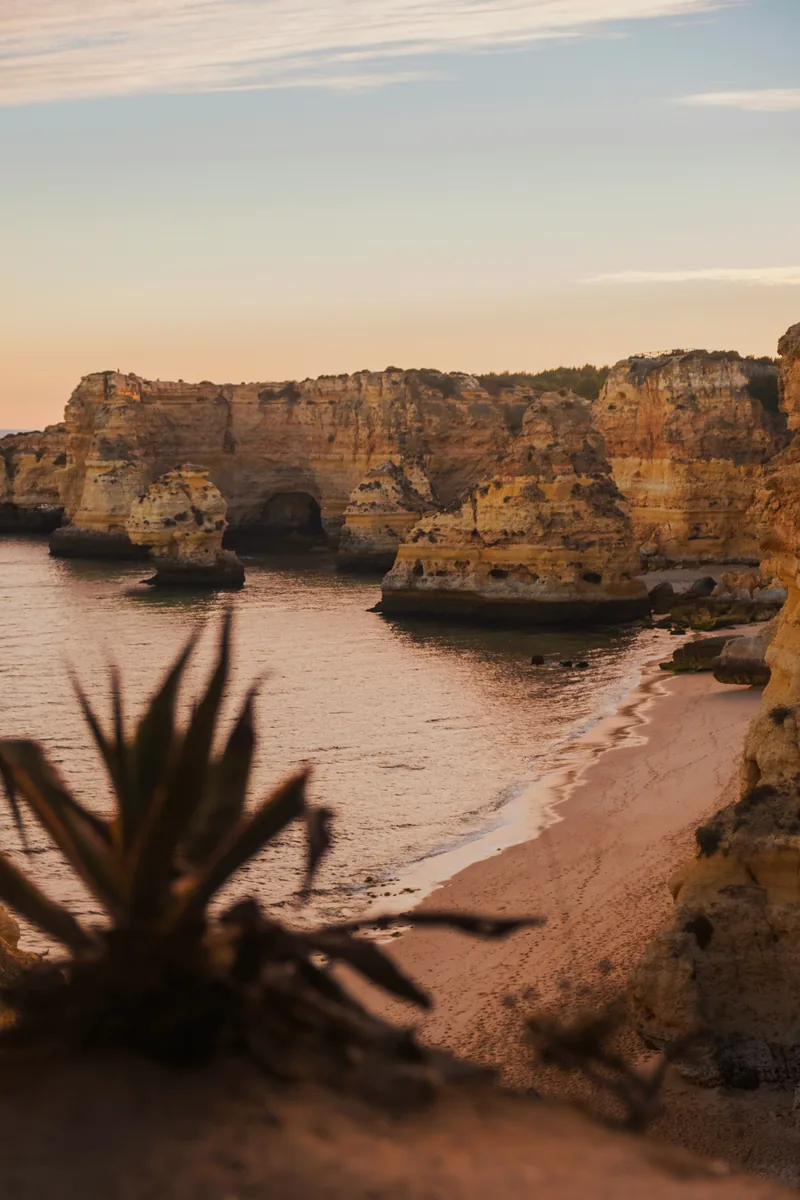
Faro in May is the most sensible short-haul choice for British and Irish travellers. Highs average 23.5°C in IPMA's 1991–2020 normals, the sea is climbing to 19°C, and May rain is light, about 26 mm for the month (south-east Spain around Almería is drier still). The Atlantic keeps things a few degrees cooler than the Spanish Mediterranean — a feature or a bug, depending on how much you enjoy a beach at 35°C. The day to plan: the ferry from Faro waterfront to Ilha da Culatra or Ilha do Farol — car-free fishing islands most package tourists never find.
Stay: inside or just outside the walls of the Cidade Velha, near the marina where the island boats leave, or in Olhão, ten minutes east by train, the fishing town with the most Culatra ferries. Eat: cataplana de marisco — the copper-pot seafood stew usually credited to the Moors.
Palermo, Sicily, Italy · 23°C · 10 sun hours
Sicily in May is everything you want Sicily to be — and importantly, well before the brutal midsummer that produced Floridia's 48.8°C reading in 2021 and the wider region's recent 44–47°C events. Palermo is chaotic, beautiful, cheap, and 20 minutes from Mondello beach. Four street-food markets (Ballarò, Vucciria, Capo, Borgo Vecchio) are reasons in themselves. Learn the difference between arancini (round here, conical in Catania) before you order.
Stay: the old centre between the Quattro Canti and the Kalsa, within walking distance of the markets; Mondello if the beach matters more than the street food. Eat: Franco U Vastiddaru for sfincione (Palermo's square pizza) and panelle.
Antalya, Turkish Riviera · 26°C · 10 sun hours
Antalya's case in May is a sea already around 20°C and an old town worth walking. Kaleiçi, inside the old walls, is a tangle of restored Ottoman houses above the Roman harbour, and the theatre at Aspendos and the ruins of Perge are short drives east. Turkish prices move fast, so think in euros and check the total before you pay.
Stay: Kaleiçi itself, to walk everywhere; Konyaaltı or Lara if you want the beach on your doorstep. Eat: 7 Mehmet for a long Anatolian meze lunch.
Madeira, Portugal · 22°C · 8 sun hours
Madeira is often mislabelled as a beach destination. It isn't. The "island of eternal spring" is mild rather than unchanging — IPMA's 1991–2020 normals for Funchal run from highs of about 20°C in January to 27°C in August — with virtually no traditional beaches and some of the best hiking in Europe. May is one of the best months: flowers everywhere, the levada walks green and dramatic, and the weather stable. The Leste — a hot dry Saharan wind — periodically spikes summer temperatures into the 30s, but rarely in May.
Stay: Funchal's Zona Velha, the old town, for walking to the market and the Monte cable car, or the Lido area west of the centre for the sea pools; Câmara de Lobos if you'd rather wake up in a fishing village. Eat: espetada (beef on a bay-leaf skewer) at Santo António in Câmara de Lobos.
The famous coasts still too cold for swimming
Social algorithms keep showing the same images of Amalfi, Santorini, and Dubrovnik and people plan May trips around them. Here's what happens instead.
- Amalfi and Naples: highs around 23°C, but the sea is still in the high teens and May brings a few wet days. Lovely for walking; not yet a swimming trip. Go in June or September.
- Santorini and the Cyclades: highs in the low 20s and often quite windy — the meltemi's early cousin. Swimming's possible but the sea bites at around 18°C. Wait for June.
- Dubrovnik and the Dalmatian coast: highs around 21°C, a sea in the high teens, and about 70 mm of rain in an average May. Go in late June or September.
How we picked these
The list comes from long-term climate averages for May — air temperature, sunshine, sea temperature and rain — read against our season ratings, the best and avoid months shown on every destination page. The figures above are rounded monthly averages, not a forecast, and nothing on this page updates live. Each destination page carries the live 14-day forecast from Open-Meteo, and the wheel spins only among the places whose next two weeks look good.